
Sustainability is no longer a side initiative in labs and technical workspaces. It is part of the criteria for how teams plan, operate, and invest. Yet when people think about green upgrades, their minds usually jump to energy systems or consumables. Furniture is often overlooked in the conversation, despite playing a surprisingly influential role in long-term environmental impact.
A workspace built with pieces that fit the work, evolve with the team, and withstand heavy use will generate far less waste over time. It will also spare a lot of budget, frustration, and last-minute reconfiguring.
This is where customization makes a measurable difference.
The Hidden Cost of One Size Fits All
Generic lab furniture tends to follow the same cycle. It looks right enough at purchase, then the workflow shifts, the equipment list grows, or the team expands. Suddenly, the bench depth is wrong, the storage is off, or there is no way to integrate new instrumentation. Most facilities end up improvising, replacing, or scrapping their equipment. Over the years, this has become an expensive habit and a steady contributor to landfill waste.
Custom furniture breaks that pattern. When a workstation is designed around actual tasks and real equipment, the chance of it becoming obsolete drops dramatically.
Built To Adapt, Not to Discard
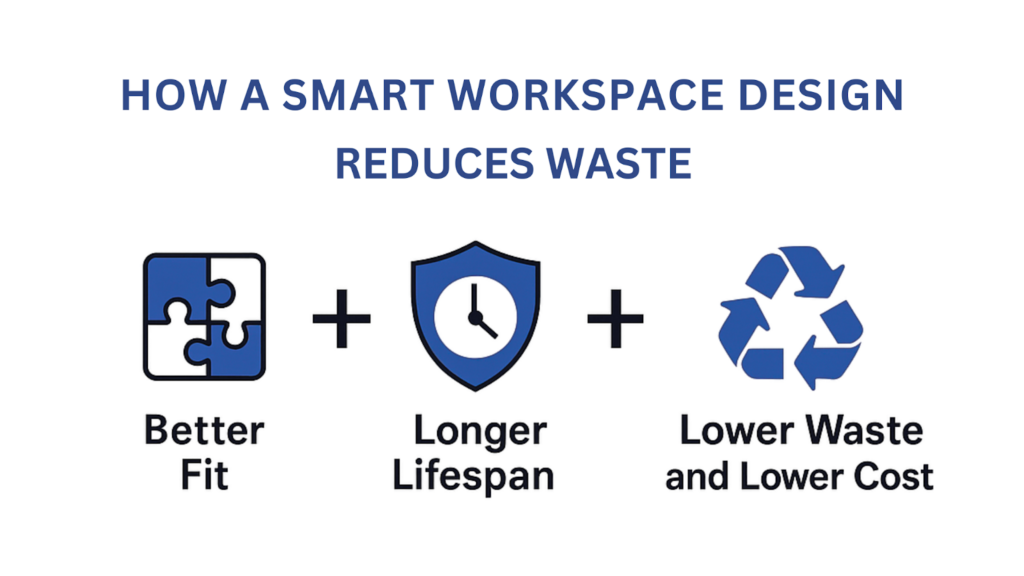
A sustainable workspace can pivot. Modular frames, interchangeable work surfaces, and scalable storage enable labs to evolve without discarding entire units. Adjustability matters too. If height, layout, and utility integration can change with the work, the lifespan of each piece increases.
Starting with flexibility instead of trying to add it later keeps teams from unnecessary replacements. Fewer replacements mean less manufacturing, less shipping, and far less waste.
Material Choices That Respect the Environment and the Work
Custom furniture enables teams to select materials that strike a balance between durability and environmental responsibility. High-quality laminate, stainless steel, phenolic, or chemical-resistant laminates are built to last. The right material for the correct application keeps pieces in service longer, reducing disposal costs.
Longevity is one of the most effective tools for sustainability. A bench that lasts fifteen years instead of five has a significantly smaller environmental footprint.
A Smarter Business Case, Not Just a Greener One
Sustainability is both an ethical choice and a practical one. When the workspace is designed with precision and foresight, teams avoid downtime, constant replacements, and rushed facility changes. That translates directly into cost savings.
Environmental and financial responsibility often align. Reducing waste almost always reduces cost.
Designing With Purpose, Planning for Longevity
Sustainable workspace design is not about sacrificing performance. It is about aligning furniture with the way a team truly works. When each component is built to fit processes, withstand the environment, and evolve as needs change, everyone benefits.
Custom lab furniture plays a quiet yet pivotal role in creating responsible and resilient environments. The more intentional the design, the less waste is developed over time.
Ready to Plan a More Sustainable Workspace?
If you want support designing lab furniture that fits your workflow, reduces waste, and stays adaptable for the long haul, Bench-Tek can help. Share your goals, and we will work with you to create a solution that fits your space with precision.
Key Takeaways
- Custom furniture reduces waste by incorporating the work from the start.
- Modular designs adapt as needs change, so fewer components need to be replaced.
- Durable materials last longer, which reduces environmental impact.
- Thoughtful planning lowers long-term costs and avoids rework.
- Sustainable choices support both the team and the budget.